

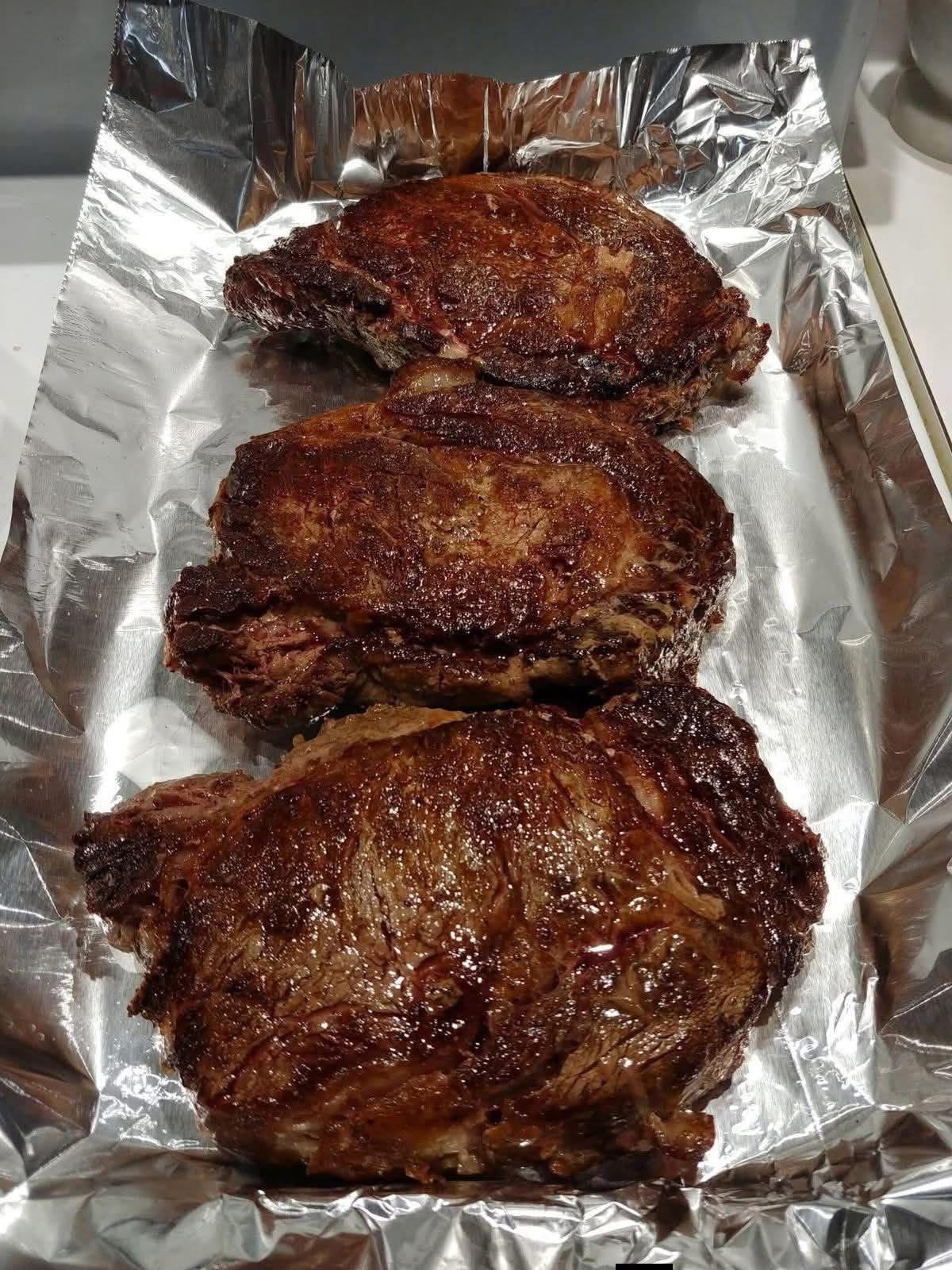
It sounds like you’d like the same structured breakdown for Ribeye Steak. Here it is, from Introduction to Embracing Healthful Indulgence.
Introduction
The ribeye steak is widely considered the gold standard of beef cuts—prized for its extraordinary marbling, deep beefy flavor, and buttery tenderness. Cut from the cow’s upper rib section (ribs 6 through 12), this steak needs little more than salt, heat, and a hot pan or grill to become a truly memorable meal. Whether seared to a perfect medium-rare or reverse-seared for edge-to-edge doneness, the ribeye delivers a luxurious eating experience that embodies the spirit of classic steakhouse cooking.
Origin
Ribeye comes from the longissimus dorsi muscle, which runs along the spine of the animal. This muscle does very little work, which explains its exceptional tenderness. The name “ribeye” first appeared in the early 20th century, but the cut itself has been enjoyed for centuries. In medieval Europe, entire rib sections were roasted on spits as “prime ribs.” The individual steak—cut from the bone—became popular in 19th-century England (where it was called a “Scotch fillet” or “entrecôte”) and later in post-WWII America, where affordable beef and backyard grills made ribeye a backyard hero. The term “ribeye” likely emerged in butcher shops around the 1920s, describing the eye-like shape of the central muscle.
Cultural Significance
In Argentina, the ribeye (ojo de bife) is the star of asados (barbecues), representing hospitality, fire-cooking mastery, and family gatherings. In Texas, ribeye season is year-round—often dry-rubbed with chile and coffee—served as a badge of regional pride. Japan elevates the ribeye through Wagyu (especially Matsusaka and Kobe), where intense marbling is celebrated as sashi, turning the steak into an almost spiritual, melt-in-the-mouth experience. Across cultures, a well-cooked ribeye signals celebration, prosperity, and the primal joy of cooking over flame.
Ingredients Quantity (for 1 steak, ~12–16 oz / 340–450 g)
· 1 boneless or bone-in ribeye steak (1.5 to 2 inches thick)
· 1 tbsp high-smoke-point oil (avocado, grapeseed, or canola)
· 1 tsp kosher salt (preferably Morton’s or Diamond Crystal)
· ½ tsp freshly ground black pepper
· 1 tbsp unsalted butter (optional, for basting)
· 2 cloves garlic, lightly crushed (optional, for basting)
· 2 sprigs fresh thyme or rosemary (optional, for basting)
Optional Additions
· Compound butter (mix butter with minced shallots, parsley, lemon zest)
· Blue cheese crumbles (melted over the hot steak)
· Carmelized onions or mushrooms (as a topping)
· Red wine pan sauce (deglaze pan with shallots, wine, and beef broth)
· Dry rub (smoked paprika, garlic powder, onion powder, cayenne)
· Serving sauces (chimichurri, peppercorn cream, horseradish sauce)
Tips for Success
· Bring to room temperature – Let steak sit out 45–60 minutes before cooking for even doneness.
· Pat completely dry – Moisture is the enemy of browning. Use paper towels.
· Salt early – Salt 40 minutes to 24 hours ahead (dry brine) for deeper seasoning.
· Use a heavy pan – Cast iron or carbon steel holds heat best.
· Don’t crowd the pan – One steak per pan ensures proper sear.
· Use a meat thermometer – 120–125°F (49–52°C) for medium-rare (target, then rest).
· Rest twice as long as you cooked – 5–10 minutes minimum to redistribute juices.
· Slice against the grain – For tender bites, especially near the cap (spinalis).
Instructions (Pan-Seared Method)
- Remove steak from refrigerator 45 minutes before cooking. Pat dry. Season generously with salt and pepper on all sides, including edges.
- Preheat oven to 375°F (190°C). Place a cast-iron skillet over medium-high heat for 3–5 minutes until smoking hot.
- Add oil. Carefully place steak in pan away from you. Press down gently to ensure full contact.
- Sear untouched for 2–3 minutes until deep brown crust forms. Flip. Sear second side for 2 minutes.
- (Optional basting) Reduce heat to medium. Add butter, garlic, and thyme. Tilt pan and spoon butter over steak repeatedly for 1 minute.
- Transfer skillet to oven. Cook 4–6 minutes (for 1.5–2 inches thick) until internal temp reaches 120–125°F (49–52°C) for medium-rare.
- Transfer steak to a cutting board. Tent loosely with foil. Rest for 5–10 minutes.
- Slice against the grain or serve whole. Pour any pan juices over the top.
Description
A proper ribeye announces itself at the table: a thick, mahogany-crusted exterior giving way to a rosy, juice-beaded interior. The fat cap has rendered to a crispy, golden edge, while the marbling has melted into translucent veins of flavor. As you cut in, steam rises, and the first bite delivers a nearly audible crunch of crust, followed by an almost creamy, buttery beefiness that coats your tongue. The cap (spinalis) is especially tender—like the best part of a prime rib concentrated into a single, blissful morsel. It is savory, rich, and unforgettable.
Nutritional Information (per 6 oz / 170 g cooked ribeye, trimmed of large external fat)
· Calories: ~410
· Fat: 29g (12g saturated)
· Carbohydrates: 0g
· Fiber: 0g
· Protein: 35g
· Sodium: ~500 mg (from kosher salt)
· Iron: 20% DV
· Vitamin B12: 110% DV
· Zinc: 55% DV
· Selenium: 45% DV
Note: Bone-in and heavier marbling (like Wagyu) will increase fat and calories significantly.
Conclusion
The ribeye steak does not pretend to be something it isn’t. It offers no apology for its richness and asks no justification. When sourced thoughtfully and cooked with care, it delivers one of the most purely satisfying eating experiences in all of cuisine. It is simple yet masterful, primal yet refined. For anyone who loves beef, learning to cook a ribeye properly is a rite of passage—and one that pays delicious dividends for a lifetime.
Recommendation
Enjoy ribeye occasionally and intentionally – not as a daily meal, but as a highlight of a weekend dinner or celebration. Pair it with contrasting elements: a bitter arugula salad, roasted asparagus, or a bright, acidic red wine (Cabernet Sauvignon or Malbec). For portion control, share one thick steak between two people, or eat 4–6 ounces and save the rest for steak salad or tacos the next day. Grass-fed and grass-finished ribeye offers a better fatty acid profile (more Omega-3s) than conventional grain-fed.
Embracing Healthful Indulgence
Healthful indulgence means eating with awareness, gratitude, and balance. A ribeye is undeniably rich in fat and calories, but it is also packed with high-quality protein, bioavailable iron, zinc, and B vitamins – nutrients many people lack. The key is context: a ribeye eaten slowly, in a reasonable portion, alongside colorful vegetables, as part of an otherwise whole-foods diet, is not a cheat or a sin. It is nourishment for the body and spirit. Compare this to a processed fast-food burger or frozen dinner: the ribeye has no preservatives, no fillers, no industrial seed oils, and no added sugars. When you choose a well-raised ribeye from a local farmer or regenerative ranch, you support better animal welfare, soil health, and biodiversity. Indulgence becomes healthful when it is mindful, infrequent, and deeply savored – a ritual, not a routine.