

Introduction
DIY Aloe Vera Hair Growth Oil is a homemade hair-care treatment that combines fresh aloe vera with nourishing oils to help condition the hair, soften dry strands, and improve manageability. Aloe vera is widely used in natural beauty routines because of its moisturizing properties, while coconut oil and castor oil add richness to the blend. With a simple preparation process and a relaxing scalp massage, this homemade treatment can become a soothing addition to your hair-care routine.
Important note: Although aloe vera and certain oils may help condition hair and support scalp care, there is limited scientific evidence that this homemade mixture directly stimulates hair growth.
Origin
Aloe vera has been used for centuries in traditional beauty and personal-care practices across different regions, including Africa, the Middle East, and Asia. Its clear gel has traditionally been applied to the skin and hair for its soothing and moisturizing qualities. Coconut, castor, and other plant oils have also been used in hair-care traditions to condition strands and protect them from dryness. This DIY recipe combines these familiar ingredients into a modern homemade hair treatment.
Cultural Significance
Natural hair care has an important place in many family and cultural traditions. Aloe vera, coconut oil, and castor oil are popular ingredients in homemade beauty preparations because they are versatile and easy to incorporate into personal-care routines. Preparing hair treatments at home also allows people to choose ingredients according to their hair type and preferences while enjoying a simple self-care ritual.
Ingredients Quantity
- 2–3 large fresh aloe vera leaves
- ½ cup coconut oil or olive oil
- 2 tablespoons castor oil, optional
- 3–5 drops rosemary essential oil, optional
- 3–5 drops tea tree essential oil, optional
- ½ cup clean water, for preparing the aloe
- 1 clean glass jar or bottle
Optional Additions
- Sweet almond oil: Adds a lightweight, conditioning feel.
- Jojoba oil: Helps soften hair and provides a smooth finish.
- Argan oil: Can help improve softness and shine.
- Vitamin E oil: May be included as a conditioning ingredient, although it does not make a water-containing mixture safe from microbial growth.
- Rosemary essential oil: Often used in scalp-care routines, but evidence for hair growth remains limited.
- Lavender essential oil: Adds a pleasant fragrance, but may irritate sensitive skin.
Essential oils are optional. Use them cautiously, dilute them appropriately, and avoid applying them directly to the scalp undiluted.
Tips for Success
- Choose fresh aloe vera: Use healthy leaves and wash them thoroughly before preparation.
- Remove the yellow latex: After cutting the leaf, allow the yellow sap to drain and rinse the leaf before collecting the clear gel. The latex can irritate the skin.
- Use clean equipment: Wash and dry all utensils and containers before use.
- Avoid excessive heat: Gently warm the ingredients rather than boiling them vigorously.
- Perform a patch test: Test a small amount on a limited area of skin and wait 24 hours before wider use.
- Be careful with essential oils: They can cause irritation or allergic reactions, even when diluted.
- Do not rely on appearance alone: A homemade mixture can spoil without obvious changes in smell or color.
Storage and safety: Fresh aloe contains water, and combining it with oil does not preserve it. This homemade mixture has no validated preservative system, so it should not be treated as shelf-stable or assumed safe for 2–3 weeks. The safest option is to prepare a small amount for immediate use and discard leftovers. For longer storage, use a properly formulated, commercially preserved product.
Instructions
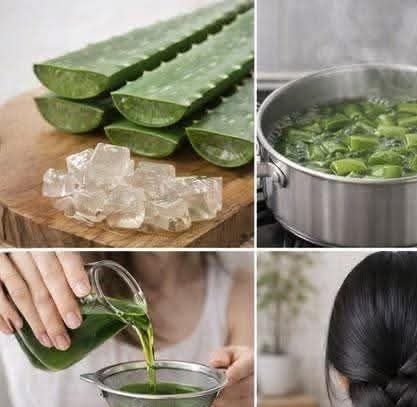
- Prepare the aloe vera: Wash the leaves, trim the spiky edges, and drain away the yellow latex. Peel the green skin and scoop out the clear gel.
- Cut the gel: Chop the aloe gel into small pieces to make it easier to process.
- Warm the aloe: Place the gel and ½ cup of water in a saucepan. Warm gently for approximately 5–10 minutes, stirring occasionally. Avoid vigorous boiling.
- Strain the mixture: Allow it to cool slightly, then strain through clean cheesecloth or a fine strainer to remove the pulp.
- Warm the carrier oil: In a separate heat-safe container, gently warm the coconut oil or olive oil until fluid. Stir in the castor oil if desired.
- Combine carefully: The strained aloe liquid is water-based, while the oils are oil-based. They will not form a stable mixture without a suitable emulsifier. For safer and simpler use, keep them separate: apply a little aloe gel to the hair and use the oil separately to condition the strands.
- Add optional ingredients: If using a commercially formulated hair oil with essential oils, follow its label instructions. Avoid adding essential oils casually to a water-based homemade mixture.
- Apply the treatment: Use a small amount of the aloe gel or carrier oil, depending on your hair’s needs. Massage gently without scratching the scalp.
- Wash as needed: Leave the treatment on for around 30–60 minutes if comfortable, then shampoo thoroughly. Stop immediately if irritation develops.
Description
DIY Aloe Vera Hair Growth Oil is inspired by traditional plant-based hair-care routines. Aloe vera gel provides a light, water-based conditioning treatment, while coconut, olive, and castor oils can help soften hair and reduce dryness. Used appropriately, these ingredients may leave hair feeling smoother, shinier, and easier to manage. The result is a simple self-care treatment that can complement a consistent hair-care routine without complicated equipment.
Nutritional Information
Nutritional information is not applicable because this is a topical hair-care product and is not intended for consumption.
For cosmetic-use reference, the preparation contains:
- Aloe vera: A water-rich botanical ingredient.
- Coconut or olive oil: Emollient oils that help soften and condition hair.
- Castor oil: A thick oil that adds lubrication and shine.
- Essential oils: Optional fragrance ingredients that can irritate sensitive skin.
Keep the mixture away from the eyes and mouth, and never drink the preparation.
Conclusion
DIY Aloe Vera Hair Growth Oil offers a simple way to explore plant-based hair care using familiar ingredients. Aloe vera and carrier oils may help improve softness, shine, and manageability, especially when hair is dry. However, no homemade oil can guarantee faster hair growth or prevent every cause of hair loss. Careful preparation, sensible application, and good scalp hygiene are essential for a safe routine.
Recommendation
For a straightforward routine, use aloe vera gel as a separate treatment and apply a small amount of coconut or olive oil to the lengths of your hair when needed. If you choose to use essential oils, select products formulated for topical use and follow their dilution instructions.
If you experience persistent hair loss, bald patches, or scalp inflammation, consult a healthcare professional or dermatologist to identify the underlying cause rather than relying solely on homemade remedies.
Embracing Healthful Indulgence
Hair care can be a relaxing part of a balanced self-care routine. Gentle scalp massage, regular conditioning, a balanced diet, and minimizing excessive heat or tight hairstyles can help support healthy-looking hair. Aloe vera and plant oils may contribute to hair softness and reduce breakage caused by dryness, but healthy hair growth also depends on genetics, overall health, and other individual factors. Enjoy experimenting with natural ingredients while prioritizing scalp safety, realistic expectations, and consistent care.