

Introduction
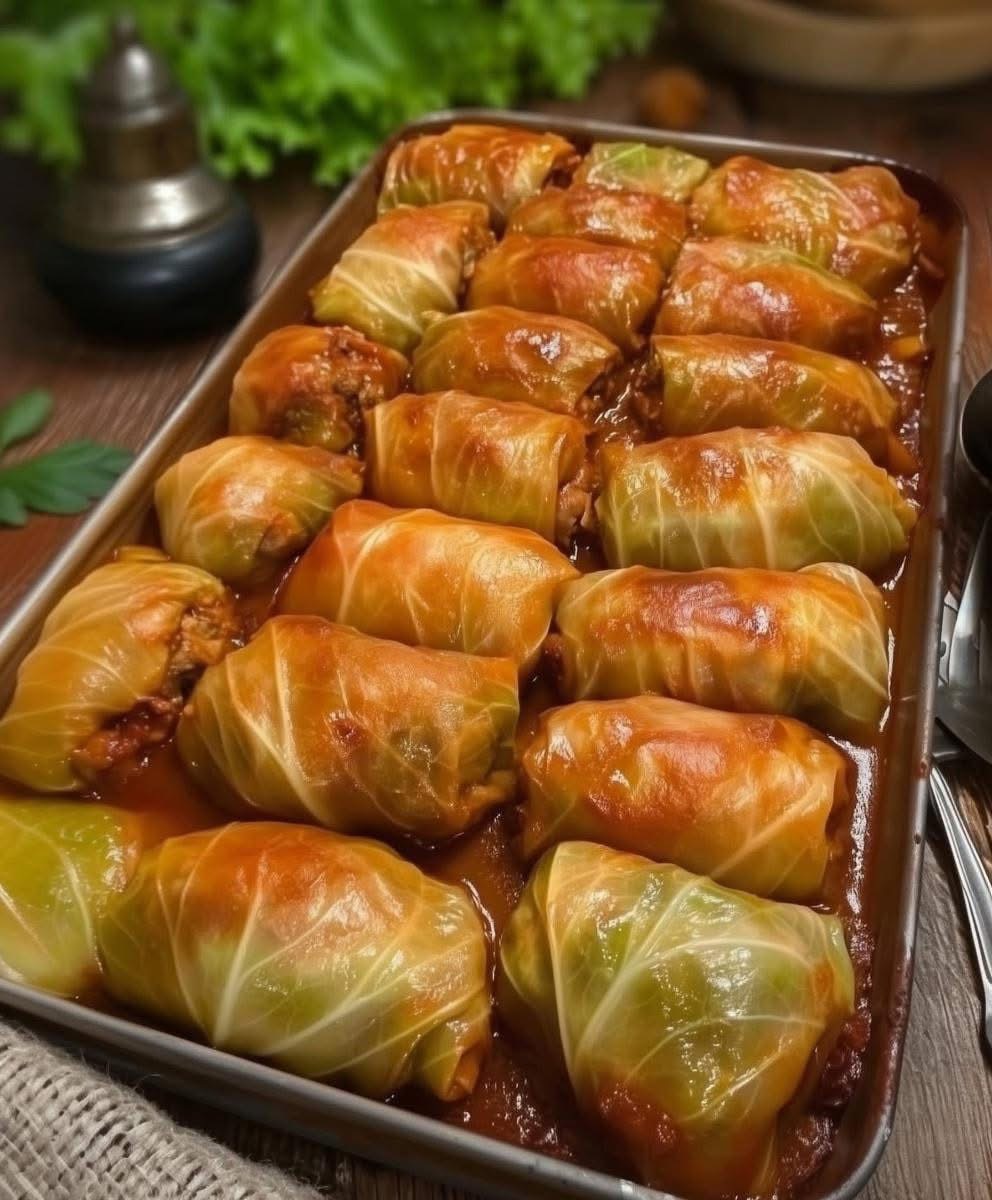
There are some dishes that transcend mere sustenance, becoming culinary hugs that warm the soul and transport you back to simpler times. Stuffed Cabbage Rolls are undeniably one of them. This classic, hearty dish, known by various names across Eastern European and Middle Eastern cultures – from Polish Gołąbki to Russian Golubtsy and Middle Eastern Malfouf – embodies the very essence of comfort food. Each tender cabbage leaf, meticulously wrapped around a savory filling of seasoned ground meat and rice, then slow-cooked in a rich, tangy tomato sauce, creates a symphony of flavors and textures that is both deeply satisfying and incredibly nostalgic.
What makes our Stuffed Cabbage Rolls truly special is the perfect balance we strike between the melt-in-your-mouth tenderness of the cabbage, the robust flavor of the well-seasoned filling, and the bright, savory depth of the homemade tomato sauce. It’s a labor of love, yes, but one that rewards every effort with an unforgettable meal that’s perfect for family dinners, holiday gatherings, or simply a cozy night in. The slow braising in the oven allows all the components to meld together, creating a dish where every bite is infused with comforting goodness. If you’ve been searching for that authentic, homestyle flavor, look no further – this recipe delivers on all fronts.
Forget any preconceived notions of bland or difficult-to-make cabbage dishes. Our step-by-step guide will walk you through crafting these culinary masterpieces with confidence, ensuring tender, flavorful rolls every single time. Get ready to impress your family and friends with a dish that’s rich in tradition, bursting with flavor, and guaranteed to become a cherished addition to your recipe repertoire. So, roll up your sleeves, embrace the warmth of your kitchen, and prepare to create some truly spectacular stuffed cabbage rolls.
Nutritional Information
Per serving (approximate values):
- Calories: 450 calories
- Protein: 35g
- Carbohydrates: 30g
- Fat: 22g
- Fiber: 6g
- Sodium: 850mg
Ingredients
- 1 large head green cabbage (about 3-4 lbs)
- 1.5 lbs ground beef (80/20 or 85/15)
- 1 cup uncooked long-grain white rice
- 1 large onion, finely chopped
- 2 cloves garlic, minced
- 1 large egg
- 1/4 cup fresh parsley, chopped
- 1 teaspoon salt, plus more for seasoning
- 1/2 teaspoon black pepper, plus more for seasoning
- 1/2 teaspoon paprika
- 1/4 teaspoon dried thyme
- 1 (28 ounce) can crushed tomatoes
- 1 (15 ounce) can tomato sauce
- 1/2 cup beef broth
- 2 tablespoons brown sugar (optional, for balancing acidity)
- 1 tablespoon apple cider vinegar (optional, for tang)
- 2 tablespoons olive oil
- Sour cream or fresh dill for serving (optional)
Instructions
- Prepare the Cabbage: Carefully remove the core from the bottom of the cabbage head using a sharp knife. Bring a large pot of salted water to a rolling boil. Carefully place the whole cabbage head into the boiling water, core-side down. Cook for about 5-10 minutes, or until the outer leaves start to soften and can be easily peeled off with tongs. As leaves soften, gently peel them away, one by one, and transfer them to a colander to drain and cool. Repeat until you have about 12-16 good-sized leaves. If any leaves are too thick at the stem, carefully shave down the thickest part of the rib with a paring knife to make rolling easier. Reserve any remaining small cabbage pieces or tough outer leaves to line the baking dish later.
- Make the Filling: In a large bowl, combine the ground beef, uncooked rice, finely chopped onion, minced garlic, egg, chopped parsley, 1 teaspoon salt, 1/2 teaspoon black pepper, paprika, and dried thyme. Using your hands, gently but thoroughly mix all the ingredients until just combined. Be careful not to overmix, as this can make the meat tough.
- Assemble the Rolls: Lay a softened cabbage leaf flat on a clean surface. Place about 2-3 tablespoons of the meat mixture near the stem end of the leaf. Fold the stem end over the filling, then fold in the sides of the leaf towards the center. Tightly roll the cabbage leaf away from you, creating a compact cylinder. Repeat with the remaining cabbage leaves and filling. If you run out of large leaves, you can use smaller leaves for smaller rolls, or chop any remaining filling and add it to the sauce later.
- Prepare the Sauce: In a medium bowl, whisk together the crushed tomatoes, tomato sauce, beef broth, brown sugar (if using), apple cider vinegar (if using), and a pinch of salt and pepper.
- Arrange and Bake: Preheat your oven to 350°F (175°C). Drizzle 1 tablespoon of olive oil in the bottom of a large (9×13 inch or similar) baking dish. If you have any leftover small cabbage pieces or tough outer leaves, place them in the bottom of the baking dish to create a protective layer. This helps prevent the bottom rolls from scorching and adds flavor. Arrange the stuffed cabbage rolls snugly in a single layer in the prepared baking dish. If necessary, you can stack them in a second layer. Pour the prepared tomato sauce evenly over the rolls, ensuring they are mostly submerged.
- Cook the Cabbage Rolls: Cover the baking dish tightly with aluminum foil. Bake for 1 hour and 30 minutes. After 1 hour and 30 minutes, remove the foil and continue baking for another 30-45 minutes, or until the cabbage is very tender, the rice is cooked through, and the sauce has thickened slightly. The exposed tops of the rolls should be lightly browned.
- Rest and Serve: Once removed from the oven, let the stuffed cabbage rolls rest for 10-15 minutes before serving. This allows the flavors to meld and the rolls to firm up slightly. Serve hot, garnished with a dollop of sour cream or a sprinkle of fresh dill, if desired.
Cooking Tips and Variations
Cabbage Preparation: For easier leaf separation, some prefer to freeze the whole cabbage head overnight, then thaw it. The freezing process breaks down the cell walls, making the leaves incredibly pliable and easy to peel without boiling. If boiling, don’t overcook the leaves; they just need to be pliable enough to roll. If a leaf tears, you can still use it by patching it with another small piece of cabbage or using it as a lining for the baking dish.
Flavorful Filling: Don’t skimp on seasoning the filling! Taste a small cooked portion of the mixture (microwave a teaspoon for 30 seconds) to adjust salt and pepper before rolling. For extra depth, you can sauté the chopped onion and garlic before adding them to the meat mixture; this sweetens the onion and mellows the garlic flavor. Some recipes add a touch of finely grated carrot or bell pepper to the filling for added moisture and sweetness.
Tight Rolling: The key to cabbage rolls that don’t unravel is a tight roll. Don’t overfill the leaves, and ensure you tuck in the sides securely before rolling it up like a burrito. If you’re struggling, practice with a few rolls – you’ll get the hang of it quickly.
Sauce Customization: While our sauce is classic, feel free to adjust it. For a sweeter sauce, add more brown sugar or a tablespoon of honey. For more tang, a splash of lemon juice or extra vinegar works well. A pinch of red pepper flakes can add a subtle kick. You can also add a bay leaf to the sauce while baking for an extra layer of aroma. For a richer sauce, you can briefly sauté a tablespoon of tomato paste in olive oil before adding the crushed tomatoes.
Vegetarian Option: To make this dish vegetarian, substitute the ground beef with a mixture of cooked lentils, sautéed mushrooms, quinoa, or a plant-based ground “meat” substitute. Use vegetable broth instead of beef broth in the sauce. Ensure the filling is well-seasoned, as plant-based proteins can sometimes be blander.
Different Meats: Feel free to experiment with different ground meats or a combination. Ground pork adds richness, while ground turkey or chicken can make the dish lighter. Just be mindful of the fat content and adjust cooking time if needed.
Make Ahead Advantage: Stuffed cabbage rolls are an excellent make-ahead meal. You can assemble them entirely, place them in the baking dish with the sauce, and refrigerate for up to 2 days before baking. This allows the flavors to meld even further. Simply add an extra 15-20 minutes to the covered baking time if baking from cold.
Storage and Reheating
Storage: Leftover stuffed cabbage rolls can be stored in an airtight container in the refrigerator for 3-4 days. They actually taste even better the next day as the flavors continue to deepen and meld.
Freezing: This dish freezes beautifully! Once completely cooled, transfer the rolls and sauce to a freezer-safe airtight container or individual portions. They can be frozen for up to 3 months. Thaw overnight in the refrigerator before reheating.
Reheating:
- Oven: For best results, reheat in the oven. Place the desired number of rolls and sauce in an oven-safe dish, cover with foil, and bake at 325°F (160°C) for 20-30 minutes, or until heated through.
- Microwave: For individual portions, microwave on medium power, covered, for 2-4 minutes, stirring the sauce occasionally, until hot. Be careful not to overheat, which can dry out the meat.
- Stovetop: You can also gently reheat rolls and sauce in a pot on the stovetop over low heat, stirring occasionally, until warmed through. Add a splash of broth or water if the sauce seems too thick.
Frequently Asked Questions
How do I prevent my cabbage leaves from tearing when I roll them?
The key to preventing tears is proper softening. Ensure your cabbage leaves are very pliable before you start rolling. If boiling, cook them until they are quite flexible but not mushy. Freezing and thawing the cabbage is another excellent method for tenderizing leaves. When rolling, don’t overfill the leaves, and handle them gently. If a leaf does tear, you can often patch it with a smaller piece of cabbage or simply make a smaller roll.
Can I use a different type of rice for the filling?
While long-grain white rice is traditional and works best for absorbing the liquid and flavors during cooking, you can experiment. Brown rice will work but will require a longer cooking time for the rolls to become tender, so you might need to adjust the baking duration. Instant rice is not recommended as it will become mushy. Avoid sticky or short-grain rice as it can alter the texture of the filling.
My sauce is too thin/thick. How can I fix it?
If your sauce is too thin after baking, you can carefully remove the rolls from the dish and simmer the sauce on the stovetop over medium-low heat until it reduces and thickens to your desired consistency. If the sauce is too thick, simply stir in a bit more beef broth or water until it reaches the desired consistency before or during reheating.
Can I make these without meat for a vegetarian option?
Absolutely! Stuffed cabbage rolls are wonderfully versatile for vegetarian adaptations. You can replace the ground beef with a hearty mixture of cooked brown or green lentils, sautéed finely chopped mushrooms, cooked quinoa, or a combination of these. Add plenty of herbs and spices to ensure the filling is flavorful. Use vegetable broth instead of beef broth in the sauce to keep it entirely vegetarian.