

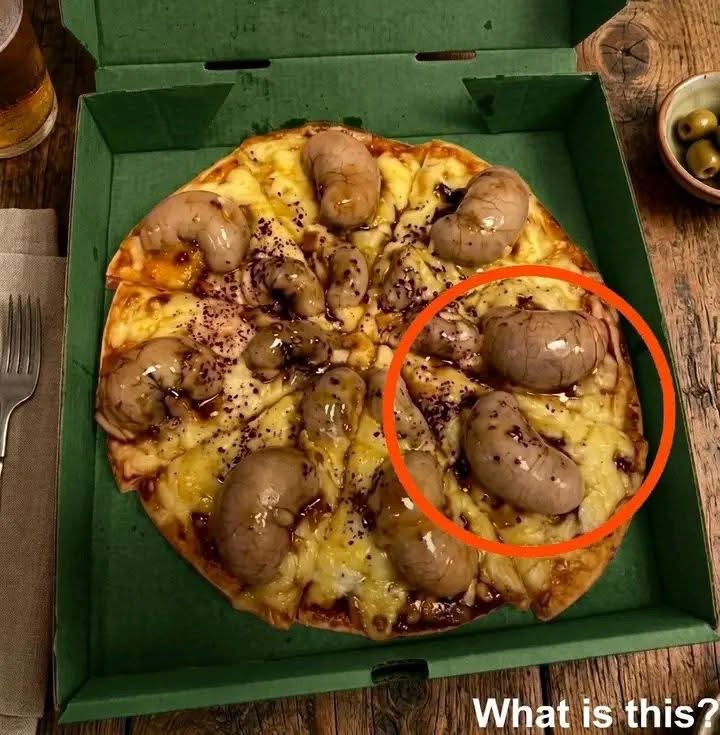
That reaction is actually more common than you’d think—and honestly, your brain did exactly what it’s wired to do: protect you from something unfamiliar.
What You Saw on the Pizza (The “Scary” Truth)
Those strange, glossy bubbles weren’t anything dangerous. They’re a natural result of how mozzarella cheese behaves under very high heat.
Here’s what’s happening:
- Moisture inside the cheese or dough turns into steam
- That steam gets trapped under the melted cheese
- As heat builds, it inflates the cheese like a balloon
- The fat and proteins in mozzarella allow it to stretch instead of bursting immediately
The result?
Those smooth, translucent “blisters” that look way more suspicious than they actually are.
Why They Look So Weird
Your brain expects pizza to look a certain way—browned cheese, small bubbles, maybe a little char.
But when:
- The oven is very hot (like stone ovens or professional pizza ovens)
- The cheese has higher moisture content
- The cooking is fast and intense
…you get these unusual, almost “biological-looking” domes.
They land right in that uncomfortable zone where something looks:
- Familiar… but not quite
- Edible… but questionable
That’s why it triggers that gut reaction of “something’s wrong here.”
Is It Safe to Eat?
Yes—completely safe.
In fact, it often means:
- The pizza was cooked at a proper high temperature
- The cheese melted efficiently
- The oven is doing its job well
Some pizza chefs even see it as a sign of good heat and technique.
When You Should Be Concerned
There are times to question food—but they look different:
- Sour or rotten smell
- Slimy or discolored toppings
- Mold (green, black, fuzzy patches)
- Unusual taste after a small bite
Your pizza didn’t check any of those boxes—it just looked strange.
The Real Lesson (and It’s a Good One)
That moment in your kitchen says a lot about how we process the unknown.
When something:
- Appears out of place
- Doesn’t match expectations
- Looks slightly “off”
Your brain fills the gap with worst-case scenarios.
But in this case, it wasn’t contamination or danger—it was just physics + heat + cheese doing its thing.
Bottom Line
What almost made you call the police…
…was actually a sign of a well-cooked pizza.
And ironically, those bubbles often hold some of the best, creamiest bites.
If you ever see it again, you can skip the panic—and go straight to eating 